Erbamat, The Fourth Grape of Franciacorta
glassofbubbly.com – novembre 2023
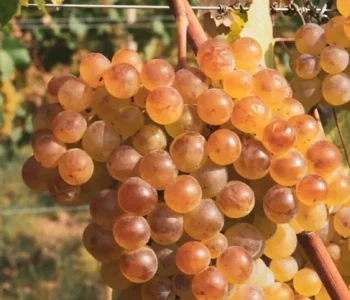
Since 2017 the Production Regulations (Disciplinare di Produzione) provides for the possibility of using also Erbamat grape to produce Franciacorta together with Chardonnay, Pinot Noir and Pinot Blanc.
It’s allowed to use Erbamat in blending up to a maximum of 10% in all types of Franciacorta except for the Saten.
Erbamat is an autochthonous grape of the region; the first mention of Erbamat dates to 1550. Agostino Gallo in his ‘Venti giornate della vera agricoltura’ (Twenty Days of True Agriculture), on the day dedicated to the vine, quoting Messer Giambattista Avogadro, writes “Albamatte are not even good, given that they make a gentler wine than any other white, but because they take too long to ripen, he is not perfect until the great heat, and more so when he has passed the year.”
Then nothing more until 1897 when the Brescian author Solitro names Albamatto or Erbamatto among the best Garda vines, traditionally grown on the Brescia side.
Historical vicissitudes and cultivation difficulties have led to its almost total extinction.
But, for some years, we have witnessed a renewed interest from some winemakers and the Franciacorta Consortium who appreciate its characteristics and potential.
There are two main reasons.
In the last three decades, due to global warming, there has been an increase in soil temperatures and solar radiation, with a decrease in available water reserves. This has repercussions on the ripening process of the grapes and in particular, those used in Franciacorta to produce sparkling wines (Chardonnay, Pinot Noir, Pinot Bianco) and, consequently, on their organoleptic characteristics at the time of harvest.
Added to this, the Franciacorta Consortium wants to recover a greater identity by establishing a strong territorial bond and thus creating uniqueness in the panorama of national and international sparkling wines.
The anticipation of the technological maturation phase (the relationship between acids and sugars) of the grapes traditionally used for Franciacorta forces winemakers to harvest early to guarantee the necessary acid structure of the grapes; however, this prevents the correct achievement of the maturation of the other parameters.
The main characteristics of Erbamat allow this problem to be overcome, at least partially. The vine has a slowed vegetative cycle and consequently a postponed maturation between the end of September and the beginning of October, approximately between four and six weeks later than the usual harvest period of other vines such as Chardonnay and Pinot.
Furthermore, Erbamat also has a limited propensity to accumulate sugars and the related loss of acidity.
This vine can therefore become important in the Franciacorta wine scene.
The inclusion of the possibility of using a new vine variety in the Specifications required several years of analysis; preliminarily the Consortium verified which varieties were historically present in the area and their properties. This investigation led to the identification of Erbamat as the vine that best suited the needs of the territory and the Denomination. The 10% quota is still a deliberately low percentage which however allows significant trials to be carried out to test its potential also in relation to the vine’s ability to maintain its characteristics years after disgorgement.
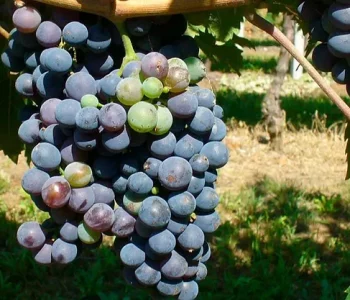
Erbamat is a difficult vine to grow: it requires sunny, poor and loose soil; the great productivity (potentially up to 200 q/ha) forces drastic pruning; furthermore, it has low basal fertility and therefore the farming method also plays an important role.
From an organoleptic point of view, Erbamat highlights a good olfactory intensity with hints of white flowers, fruit and citrus fruits; excellent flavor and persistence complete the profile, together with the marked acidity. These characteristics give the wine a delicate olfactory character, enhancing its freshness and citrus.
Some producers, to verify its actual potential, have started producing some sparkling wine with Erbamat in percentages higher than 10% without therefore being able to claim the Franciacorta denomination.
The tasting, purely for educational purposes, of a sparkling wine produced with 100% Erbamat reveals itself as a burst of energy with an almost sharp acidity. The nose recalls notes of yeast accompanied by vegetal and floral hints. The mouth is hard, citrine with a metallic note given by the presence of malic acid. An extreme product that is not easy to drink which allows you to understand the characteristics and potential of the vine, in reference to the contribution of freshness.
Scarica l’articolo